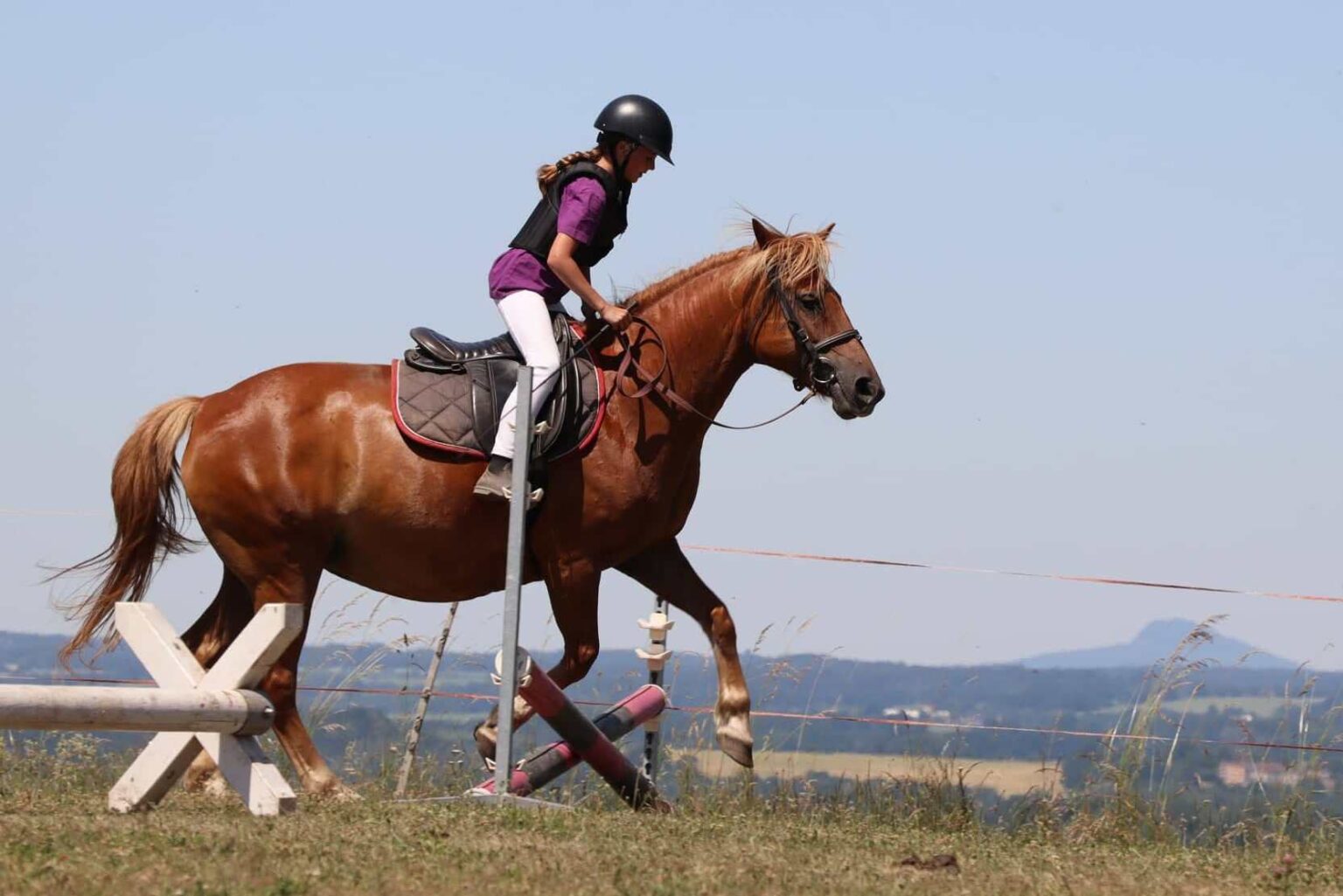
Characteristics: 9-year-old Appaloosa mare was left without hoof trimming for about 2 months during the summer of 2019. Her hooves were trimmed regulary every 6 weeks in the previous years. She began to walk reluctantly even on grassy and sandy surfaces. From the age of six, she had been gaining weight significantly from spring to autumn. There is a visible disproportion between the size of her body and her hooves. The body is muscular, overweight in the summer, and the hooves are small in proportion to the body. The hooves were flatter during 2020 than in the previous years.

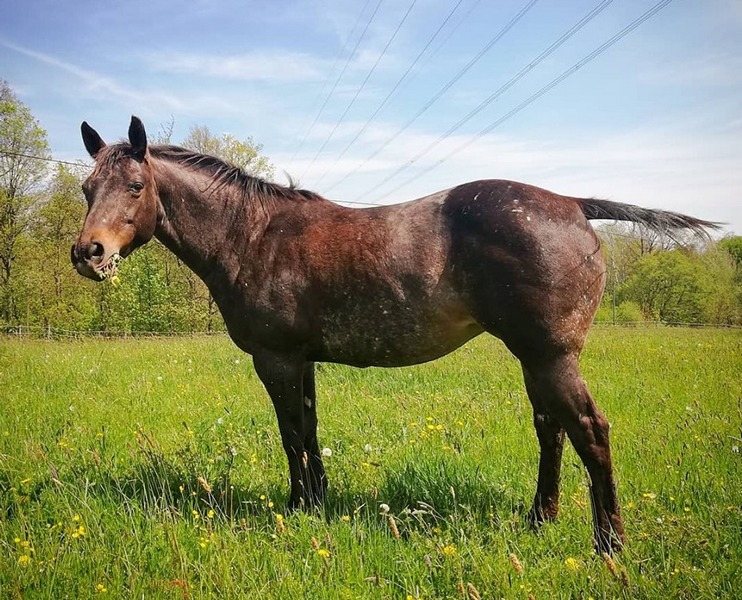
Husbandary practise: stays 24/7 on 5 ha of grassy pastures with other horses. Grazes almost year-round, mineral lick and salt available, fed hay in winter.
Usage: recreational ridding in nature (5-20 km) and occasionally on a sand in arena, 1-3 times a week. In 2017 and 2018, the mare walked decently on various terrains, including gravel paths and roads. The mare has been ridden since 3.5 years old. Step by step, only very gradualy getting used to the rider’s weight, mainly in the arena at a walk and trot, walks in nature alternately on hand and in the saddle. From 4 years old, gradual extension of rides with a rider in the saddle.
Hoof condition: the mare walked barefoot her entire life until 2018, without problems. In August 2018 she started to be more sensitive on rocky paths. In 2019 and 2020, the hooves tended to lengthen forward and flare quickly if intervals between trims longer than 4 weeks. The horse was monitored for the connection between grazing and obesity. It was the first time the owner learn about existence of insuline resistance and some breeds having disposition to it (Quarter horses, Appaloossas, Andalusians, Haflings, ponies in general). A test for Cushing’s syndrome was performed (February 2020), which came out negative. A blood sample was taken for an insulin resistance test, also negative. Hay and grass analysis were performed with good results – no significant excess or deficiency of important components in the hay.
Trim: from 6 months of age after purchase, trimming of the hoof walls to the level of the live sole, light bevel of the hoof walls in the quarters and at the toe, cleaning of exfoliating sole, no trimming of the live sole and frog (only cleaning of old or exfoliating horn). This approcach was used for years with a frequency of every 4-6 weeks.
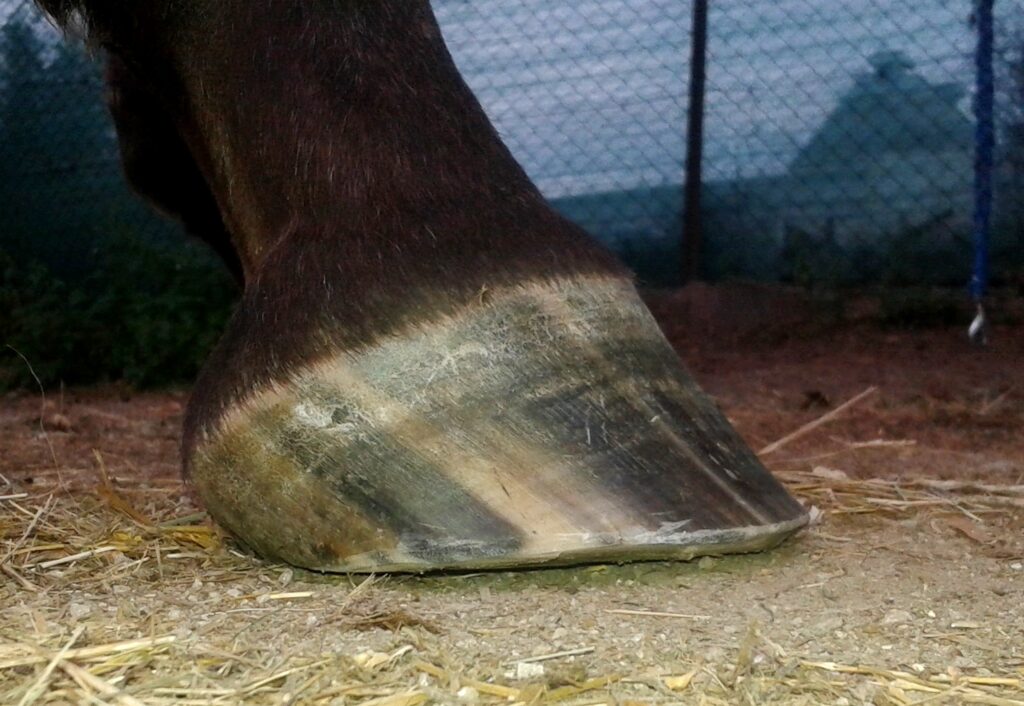
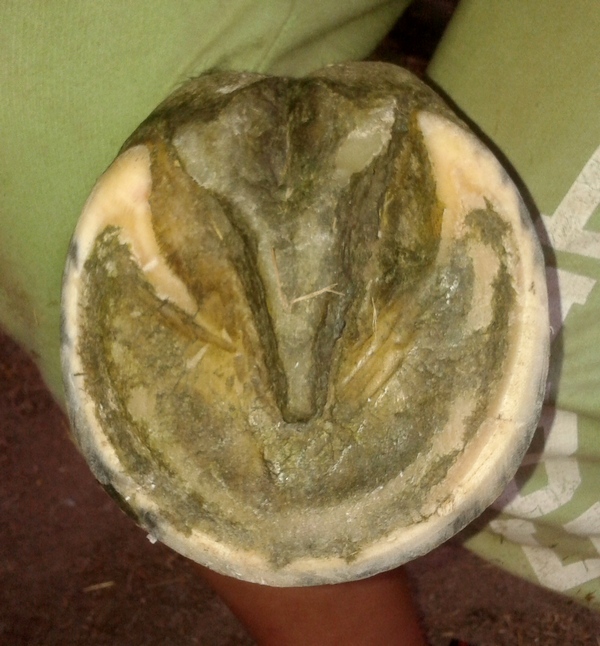


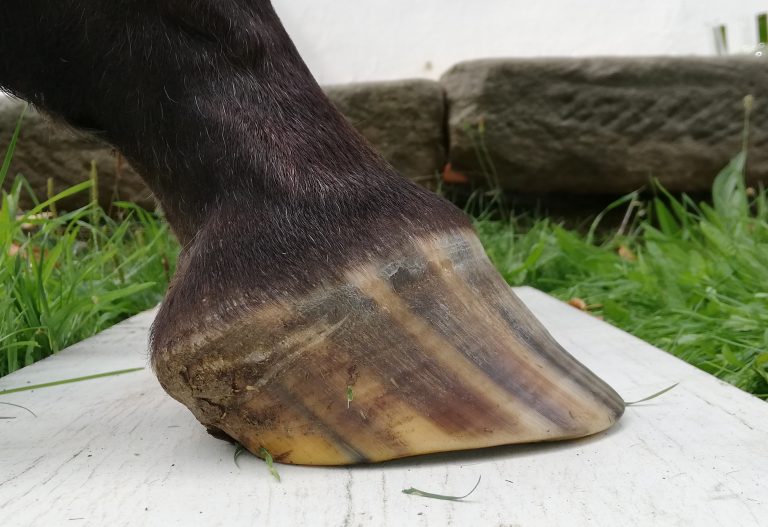
September 2019: a physiotherapist was scheduled because the mare doesn´t want to gallop on her right leg. A blocked sacrum joint was found and corrected. The mare walks very well on grass and sandy terrain. She continues to have difficulty walking on gravel paths and roads during this period.


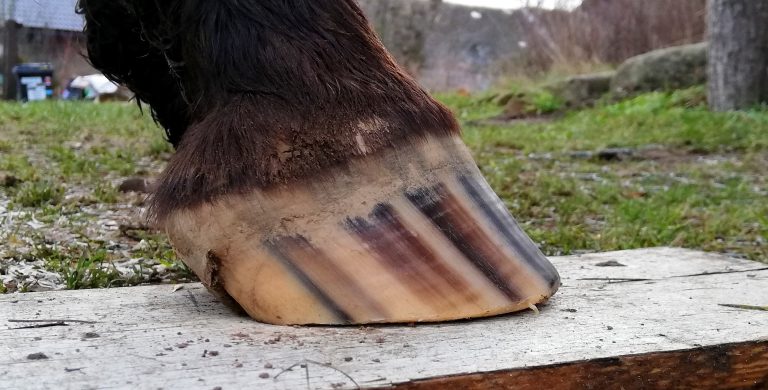
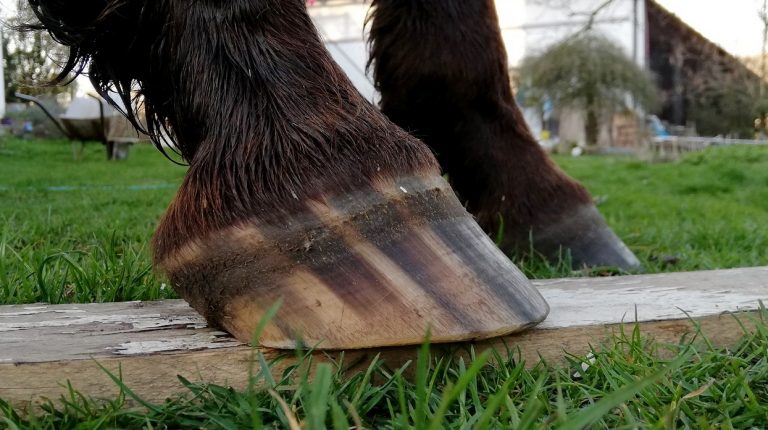

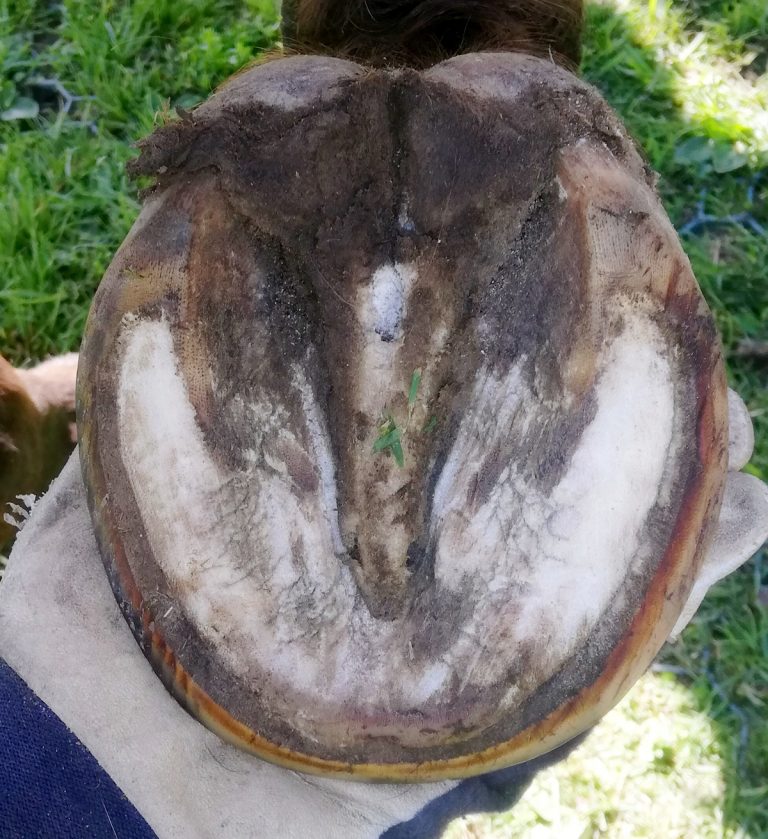
29.4.2020 the results from the laboratory in Germany (Laboklin) arrived and the second insulin resistance test is negative. The veterinarian recommended taking the mare from off grazing complitely due to obesity, as overweight state negatively affects the overall health of the horse (load on the joints, adipose tissue is active and affects metabolism, more weight acting on the hoof). The owner decided that the mare will not be significantly restricted in grazing for the time being, she will remain in the herd and more frequent movement with hoof boots will be ensured.
In June 2020, Renegate Viper boots were purchased for testing on the front legs. The first ride of about 6 km was fine. After the second ride of about 8 km, the tendons on the front legs of the mare became swollen. At the same time, when riding uphill in the forest, the mare did not have traction in the toe because the boots have rounded toes. Her pasterns kept breaking forward while climbing the hill. It is possible that boots with hooves with a longer toe also move the break-over more forward, which is counterproductive in the rehabilitation of these hooves. The boots were returned and the mare is being ridden without them. She moves well on grassy surfaces.

On August 12, 2020, the insulin sensitivity data in the second insulin test result was checked once more out of interest. One specific parameter related insulin had slightly increased values. The veterinarian did not comment on it at the time of doing the test and reaging the results April 2020. Upon request and after consultation with another expert, the veterinarian has now informed that this may indicate the onset of insulin resistance. Since it was not possible to ensure more intensive exercise (non fitting saddle, trouble with hoof boots) and the horse is clearly obese in the summer, the owner will adjust the fences during the winter of 2020 and the mare will be put aside together with another horse in the following years and fed only hay all year round or will receive a grazing muzzle.
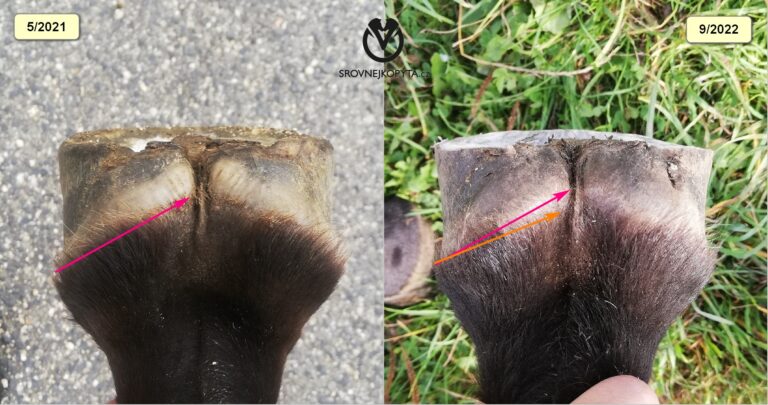
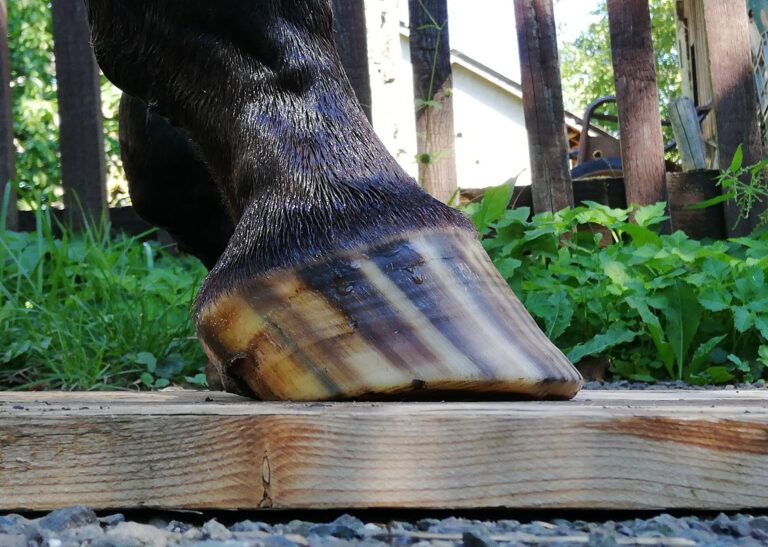
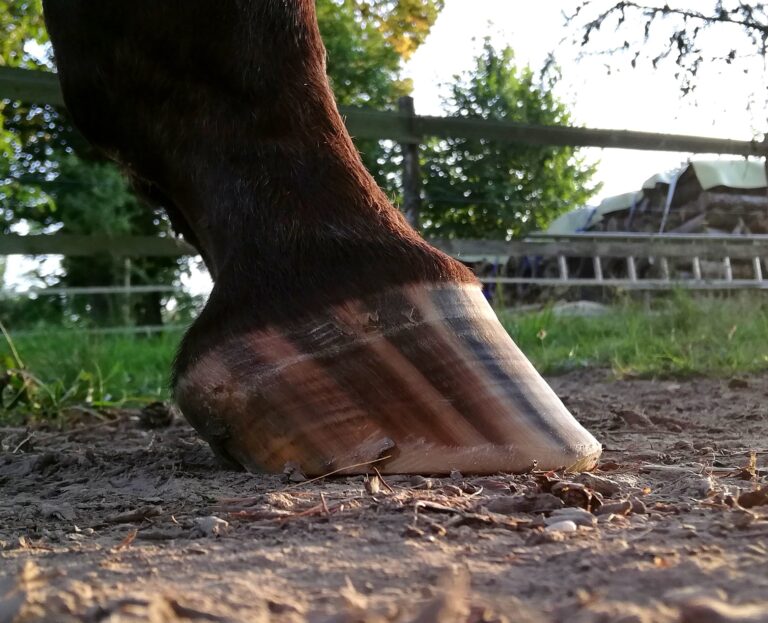
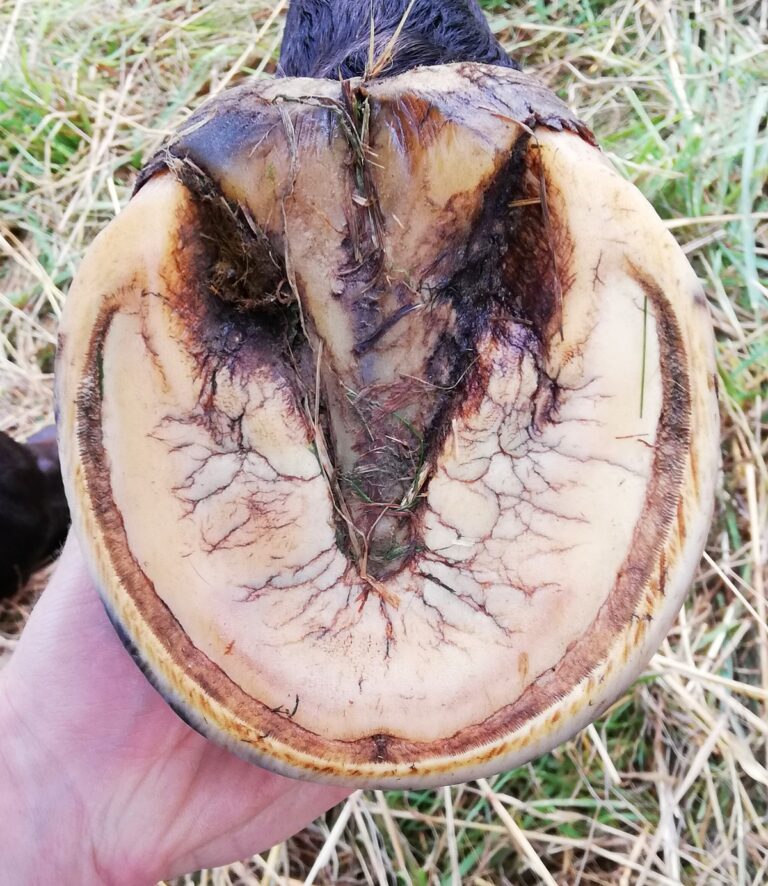
August 21, 2020 The hooves are close to the physiological shape in August 2020 (after a year), but the sole has not yet thickened. It continues to yield when pressed by findgers around the tip of the frog. The frog grooves at the around tip of the frog are very shallow. Metabolic rings are visible on the hoof walls. The horse does not walk well on stones and hard surfaces and now in August not even on grassy surfaces under the saddle (also related to the condition of the muscles, see below).
Change in trim: the owner started to take into account more the pastern axis when trimming, which is slightly bent backwards. The horse will be left with little bit overgrown hoof walls in the heels, about 2-3 mm above the level of the sole, so that the pastern axis was more in a straight line.


On September 21, 2020, the mare was examined by a new saddler for the purpose of fitting an English saddle. The western saddle, which was custom-made for the mare in February 2020, is unfortunately unsuitable for the mare, because the saddle-tree extends beyond the last rib. The mare was repeatedly stiff in the back and had a blocked SI joint. The new saddler also noticed stiff muscles around the shoulder blade. He recommended postponing the fitting and re-engaging a physiotherapist/chiropractic. The chiropractic readjusted the mare’s SI joint and partially massaged the stiff muscles in the hips, around the shoulder blade and withers. The owner started massaging the mare every day as recommended and after the next visit in October 2020, the condition will be assessed. The stiff muscles in the back may be related to the new western saddle. The stiff muscles around the shoulder blade may be related to the thin soles and the way the mare adjust the stride as a result.
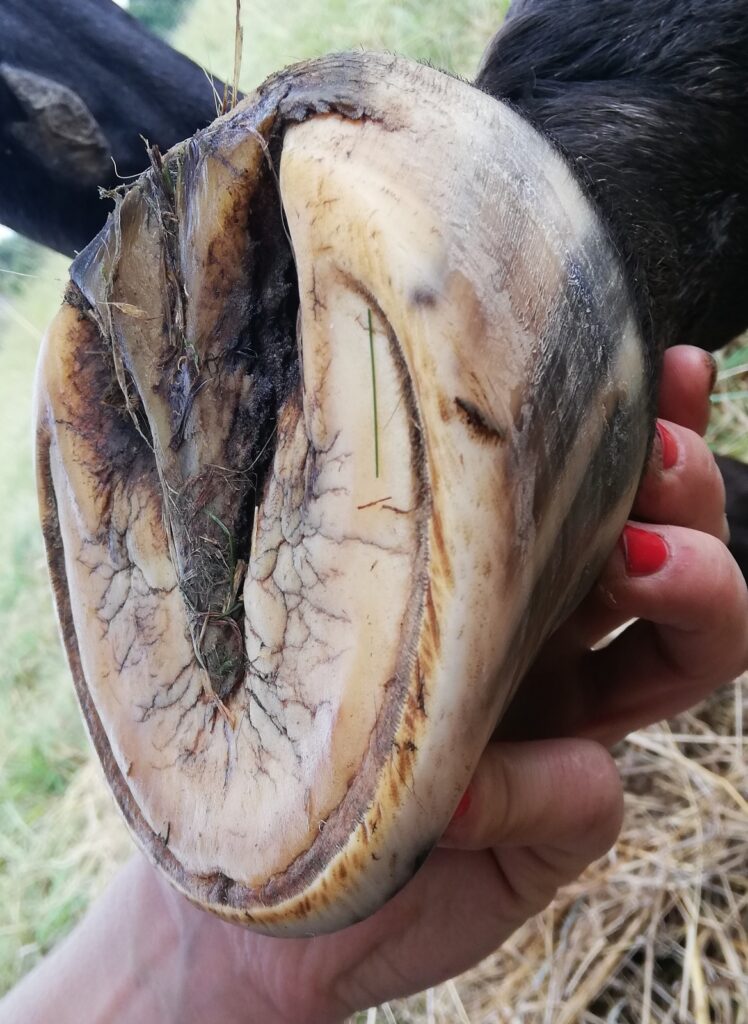
Since 1.10.2020, the mare had been feed Ungulat (special hoof product, additive of minerals) to improve and support the growth of the hoof horn.
On 24.11.2020, the chiropractic reported that the mare now has very good back mobility and everything is fine. In January 2021, the owner will contact the saddler again.
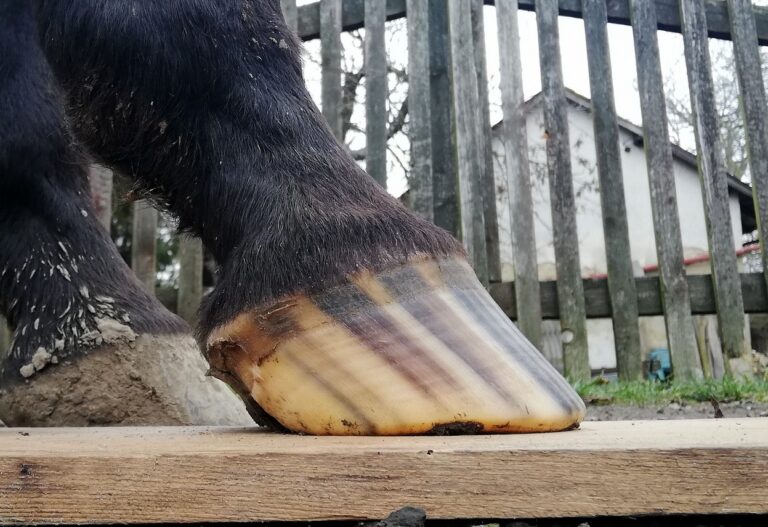


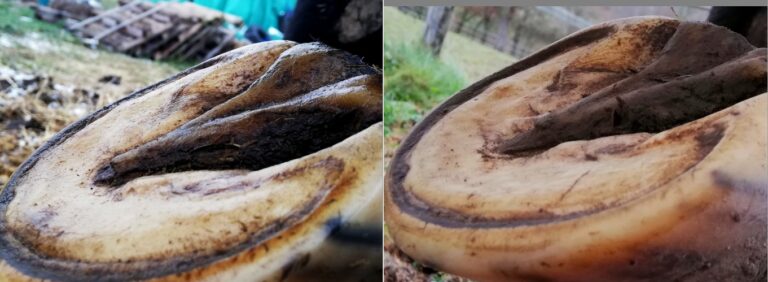

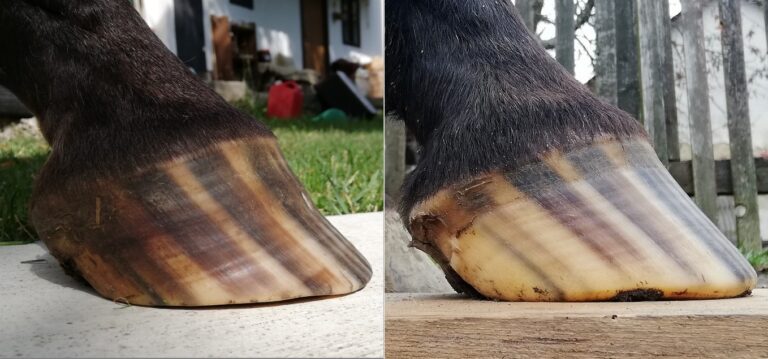
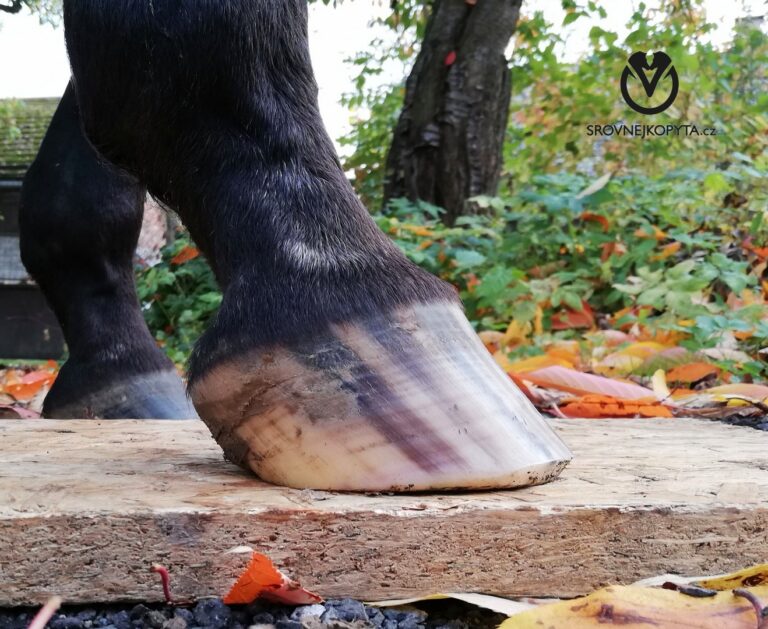

Special attention was brought also to hind hooves. After making xrays it was revealed that there was slight NPA – 2 degrees in the hind hooves. The toe must be beveled every 14 days to avoid lever effect. It not beveled every 14 days the NPA tends to come back.

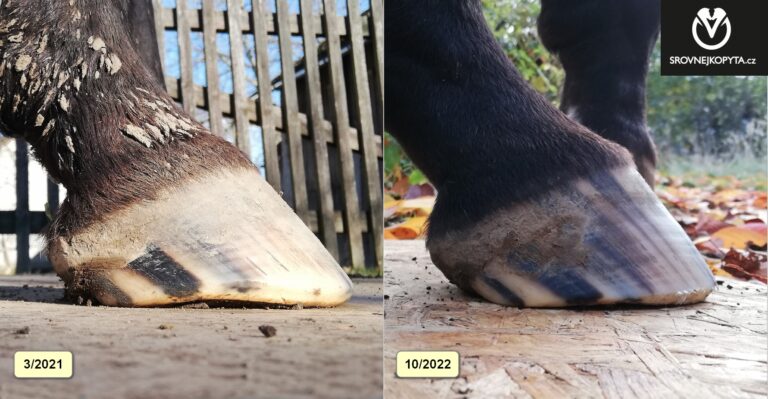

1/2023: since 9/2021 the mare has been kept on hay from November till May (muzzle wasn´t working, kept falling off). She can slowly start grazing in June/July every year. The quality of pasture must be checked. If grass too lush, it may effect the mare´s hooves again. It´s preferable that she starts grazing when the grass on pastures becomes little bit dry. The mare is full of energy, rideable and without back pain. She is ridden in a dressage saddle, which is much shorter than western saddle and fits her very well. No problems moving on soft terrains and flat asfalt road without stones. Still sensitive on stone surfaces but can handle certain amount of them without bruising or being lame. The owner is not riding regulary anymore due to change of lifestyle. The owner adjusts to conditions and doesn´t force the mare on stony surfaces. Enjoys relaxed riding in the country side, mostly on grass and forest surfaces. The mare can handle countryside rides 7- 20 km on various surfaces with no problems.