Rehabilitation of contracted front hooves and asymetrical hind hooves of a Quarter horse gelding
Characteristics: 11 years old Quarter horse gelding
Husbandary practise: 24/7 on pastures with other horses.
Use: recreational riding
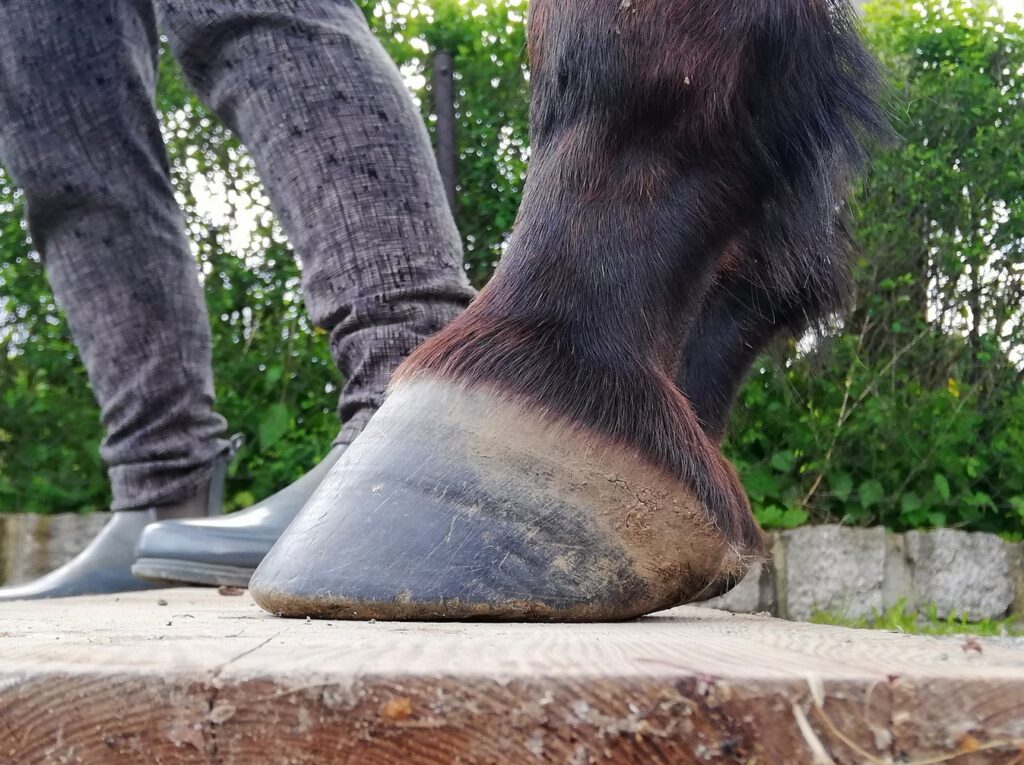
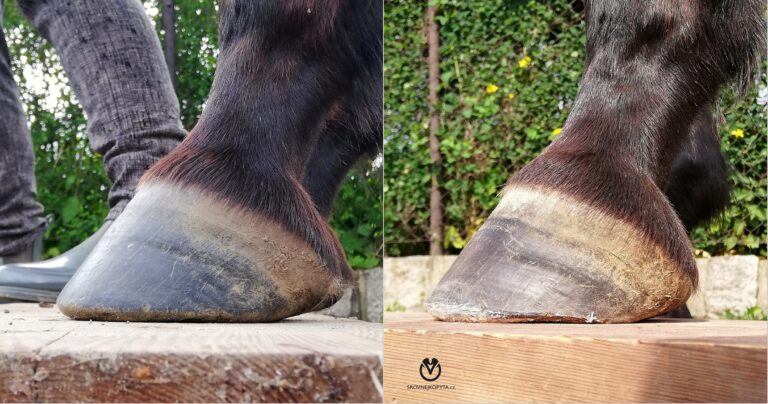
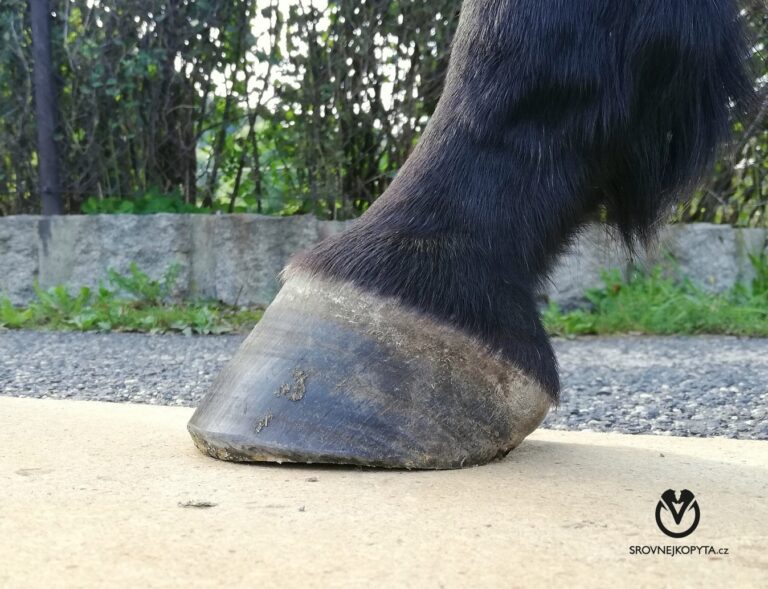
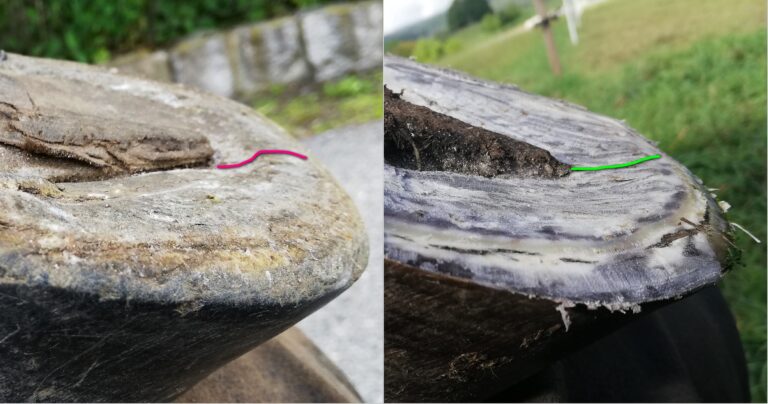
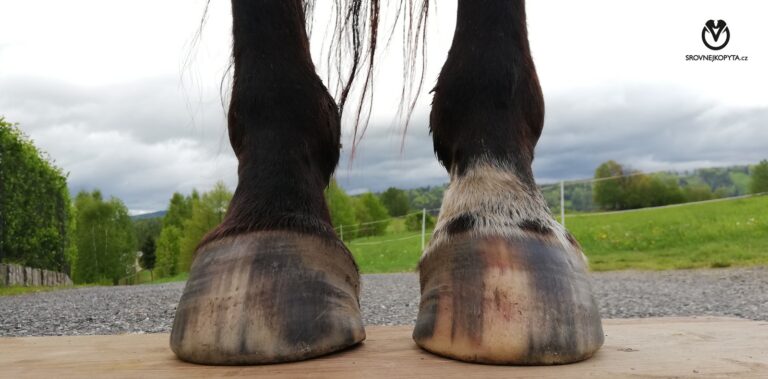
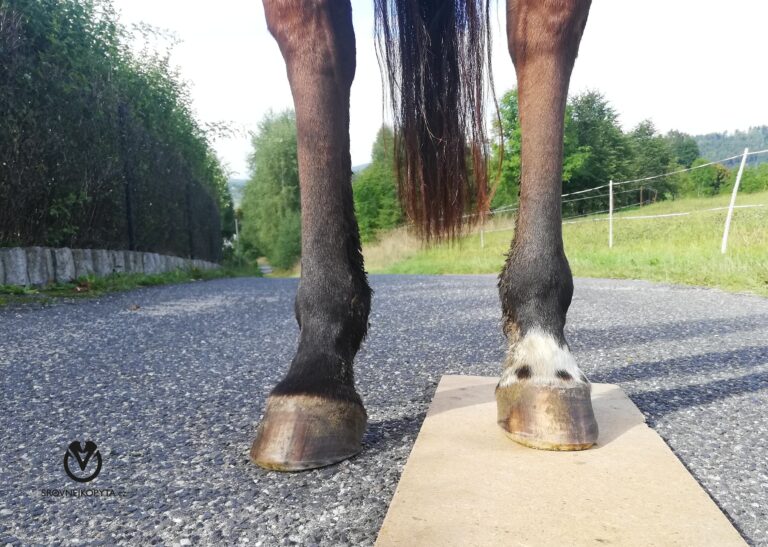
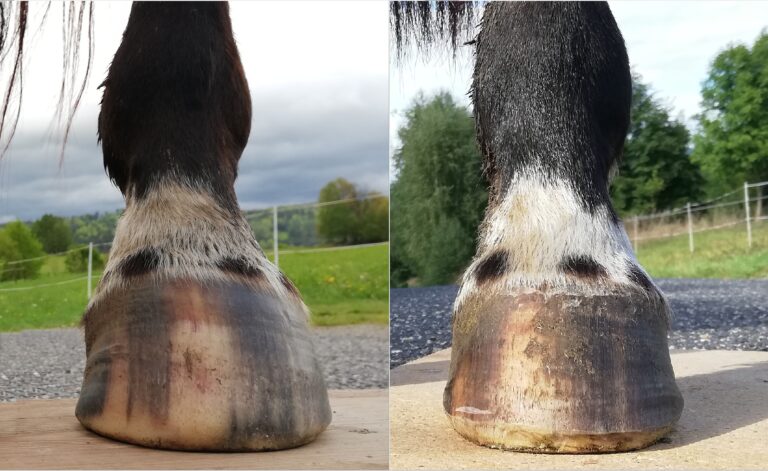
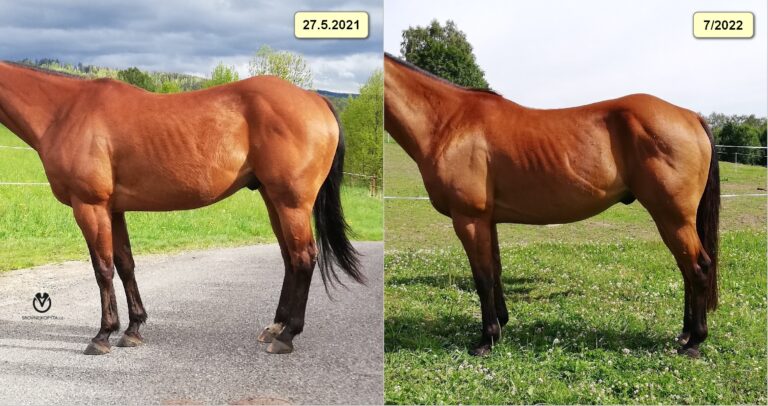
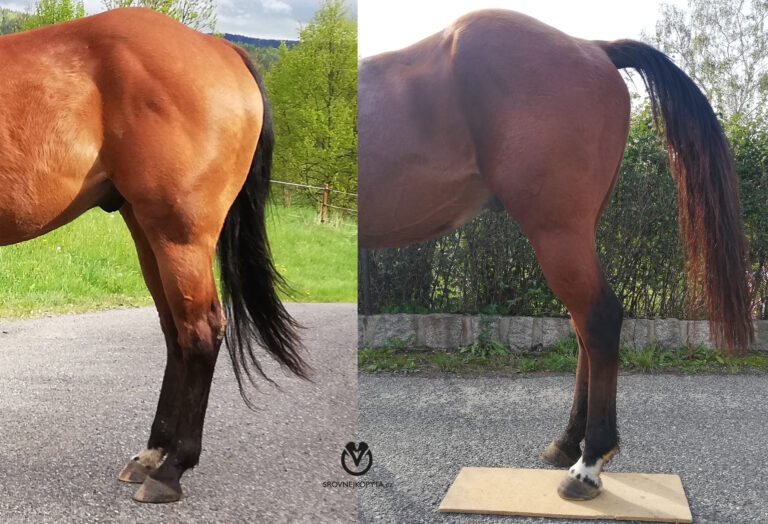
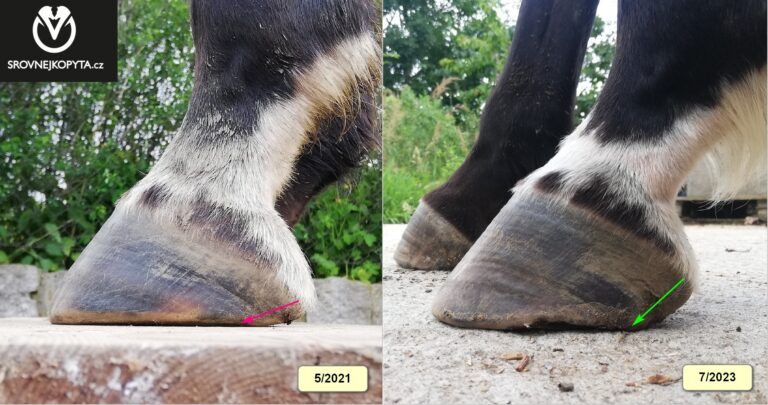
Hoof condition on the 27.5.2021: The hooves had a convex front wall and very low, underrun contracted heels. At the hind hooves, the gelding overloaded the outer walls and the hooves gave the impression that they were tipping out. The condition of the hind hooves greatly influenced the horse’s stance. The horse often stood with its hooves close together and stepped under. The farrier recommended shoeing the horse, explaining that he would use two re-shoes to straighten the gelding’s hind hooves. The owner preferred barefoot rehabilitation. P3Trim applied every 4 weeks from now on.
The photos can be magnified by open them in a new window
Left front (LF) 5/2021 before first P3TrimLeft front (LF) 5/2021 after first P3Trim5/20215/2021
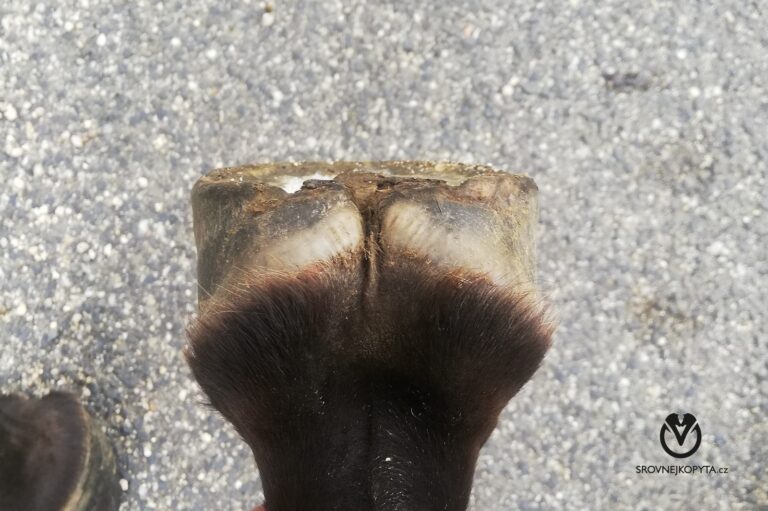
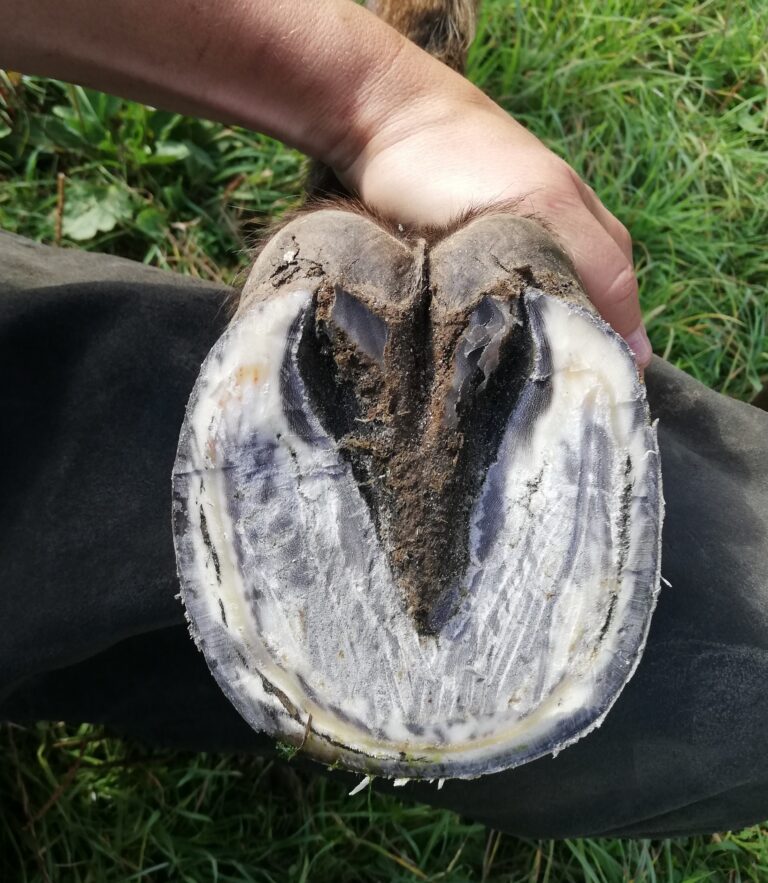
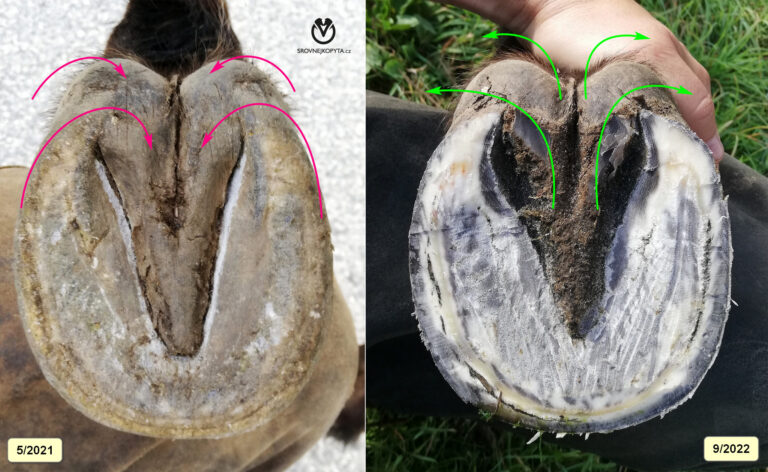
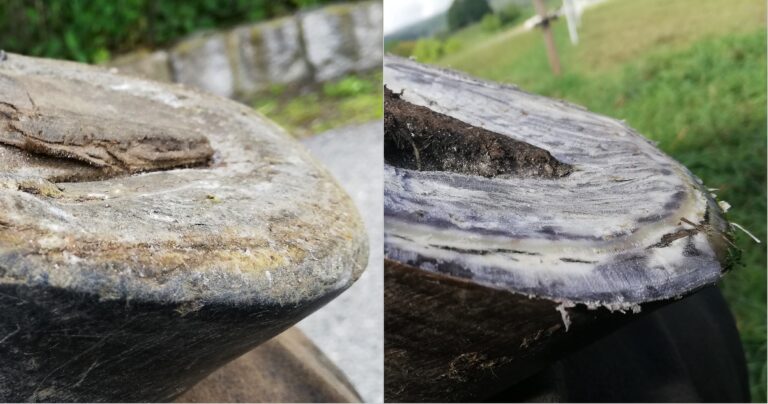
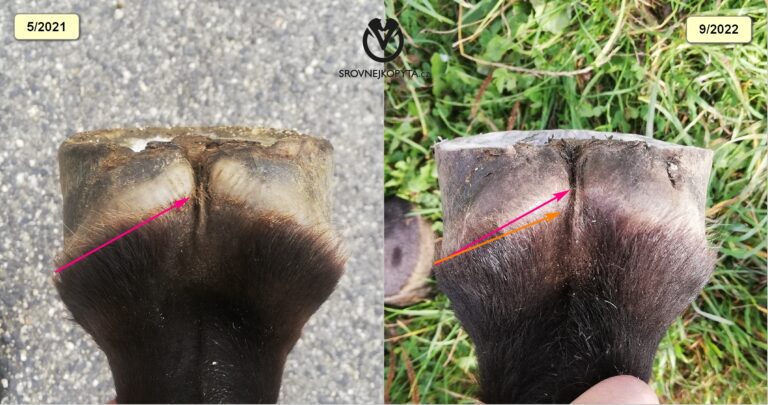
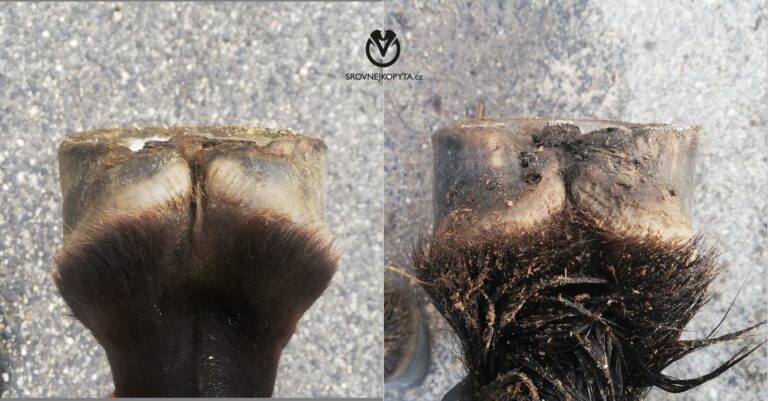
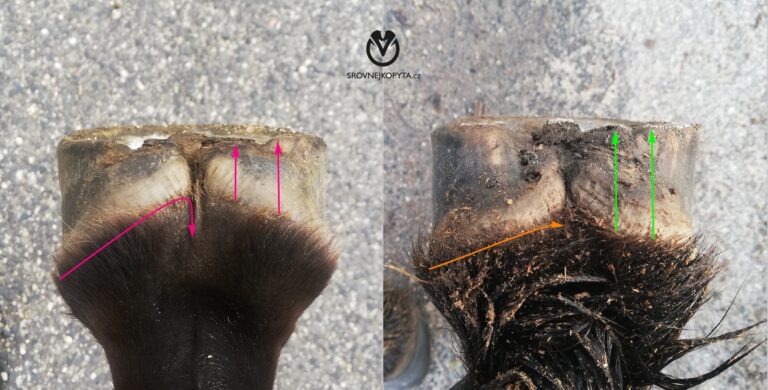
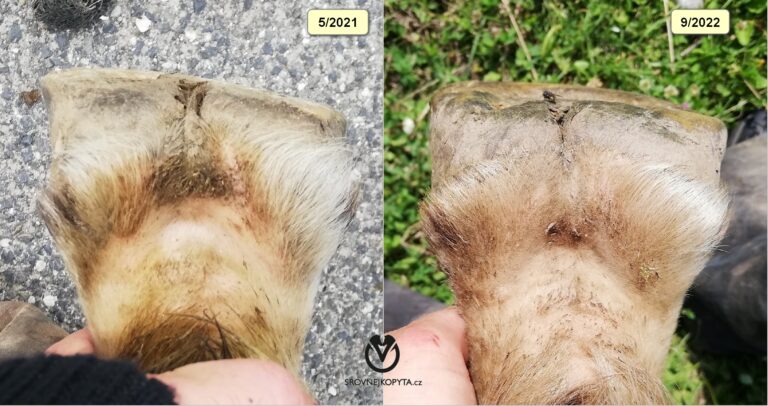
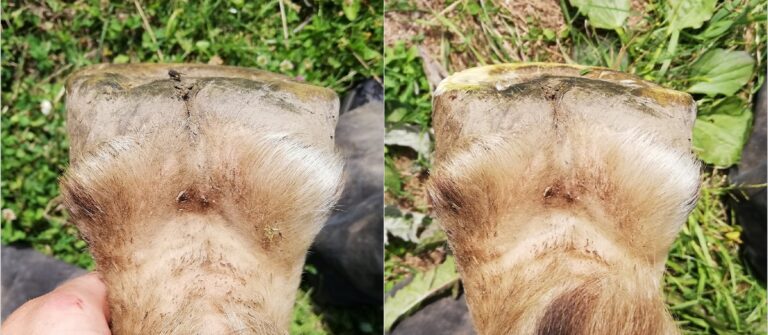
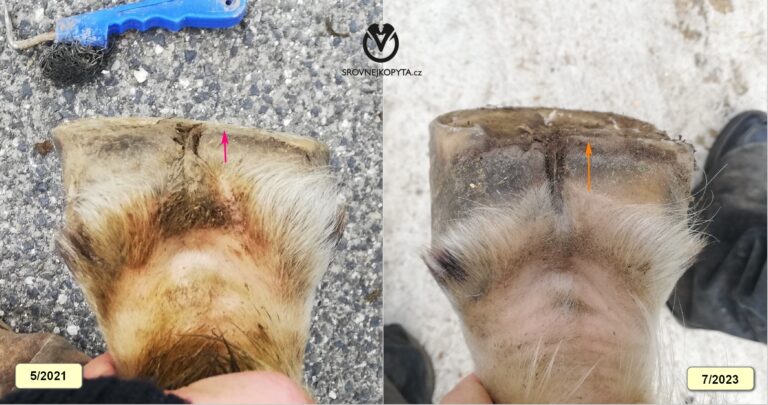
Hoof condition on the 10/2022. By relieving the walls and regular trimming every 4 weeks, the tension in the hooves changed and extensive separations in the white and water lines appeared on all 4 hooves during August 2022. Note the widening of the central sulcus of the hoof, which in 5/2021 was completely crushed together and formed only a very narrow line.
1/2022 before trim. You can see that the upper half of the front wall has grown closer to the coffin bone. 1/2022 after trim. The back of the hoof is taller. The hairline / heelsbulbs are higher above the ground than at the initial state in 5/2021.1/2022 before trim. The heel bulbs are „beeing unpacked“ asymetricalyThe uneven expansion of the heels could have been caused by a developing abscess. On February 19, 2022, an abscess ruptured on the inner heel bulb.
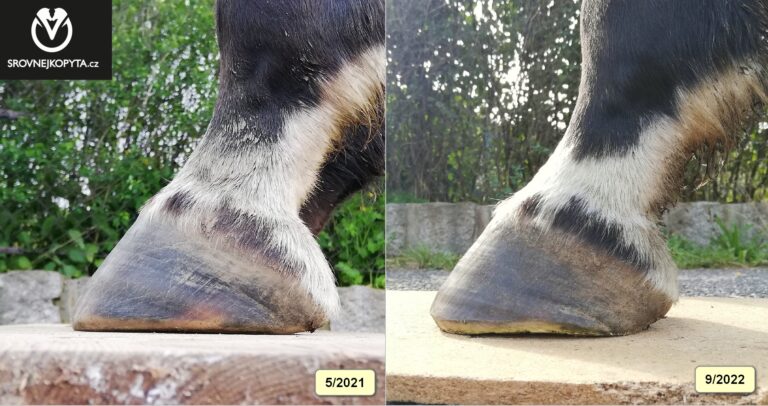
Hoof condition as of September 12, 2022: new hoof capsules have grown in a year and a half, which are now close to the physiological shape, especially on the front legs. The back of the hoof has developed significantly and the caudal part continues to decontract. The gelding moves very well. The horse’s entire stance has improved.
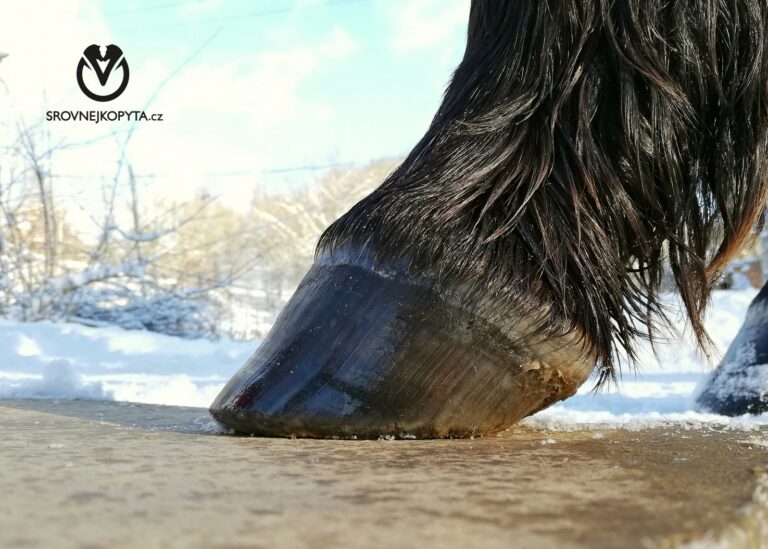
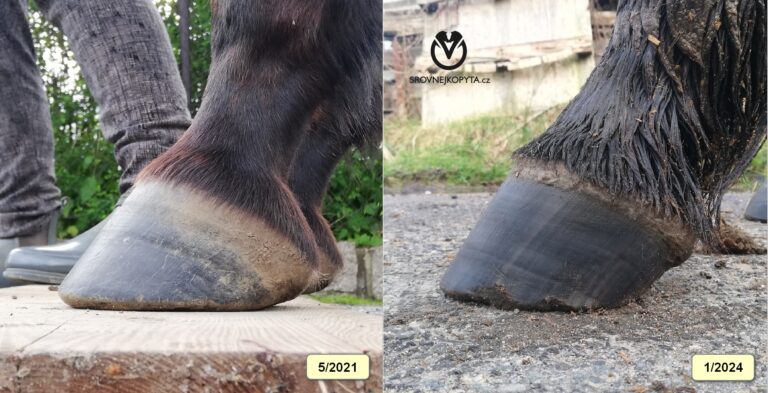
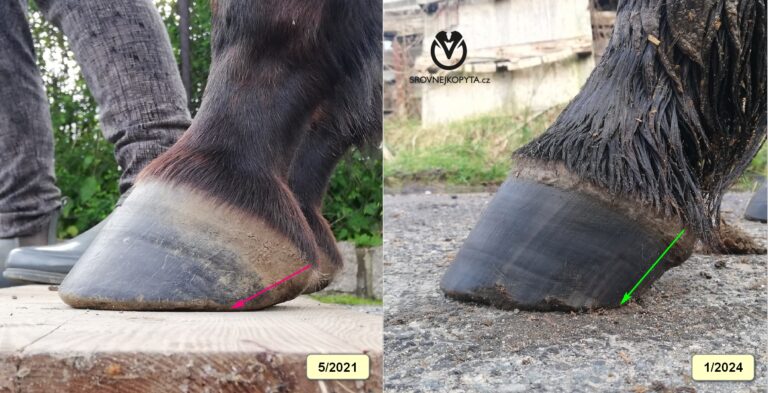
9/2022 The heel angle has improved. The hairline is visible higher above ground than in 5/2021.9/2022 during trim9/2022 after trimComparison over timeThe back of the hoof is being “unwrapped” step by step by the rehabilitation process.The hooves initially had a unusual concavity, with a platform forming around the circumference of the hoof, which was probably related to the tight hoof capsule. The sole was beeing squized to unnatural position. Nowadays, the hooves have a natural concavity.The difference is not significant at first glance, but upon closer inspection it is visible that the mass of the frog gradually grows from the inside out. The frog is more voluminous in the photo from 9/2022. The back part of the frog was very compressed and atrophied in the past, which is why its rehabilitation takes a long time.The hairline gives us clue that the decontraction is in the processOn the picture from 1/2024 hoof before trim exceptionaly after 8 weeks (during winter season hoof horn grows slower. It is possible to prolong intervals in hooves which are close to the physiological shape). The heel angle has improved significantly.The frog is in the middle of exfoliation process. The exfoliation process slows down deconraction of the caudal part. After the frog grows back, the decontraction will continue.Left hind hoof9/2022 left hind before and after trim (right)The stance of the hind hooves as of 5/2021Left hind hoof front view 5/2021 a 9/2022The stance of the horse improved significantly.The horse has been putting an uneven load on the hind hooves for a long time and the growth of the hoof capsules is limited by the shape of the joints and relating stance. Nevertheless, there has been a significant improvement. Above all, the foot has become stronger, the pastern has become thicker and the heels have become slightly wider. Trim every 4 weeks necessary (no longer) to maintain status quo.
Characteristics: 18 years old mare, quarter horse x arab x mongolian horse Husbandary practise: lives in a small herd with other horses, 24/7 on pasture, hay in winter Use: children horse riding State of the hooves April 2021: The original owner kept the mare with cows and small herd of horses and the hoof…
Welcome to the English version of the educational Czech website about horses hooves www.srovnejkopyta.cz. It will bring you access to plenty of case studies which are being added step by step and help you understand which factors influence hoof health and comfort of movement of the domesticated horse.