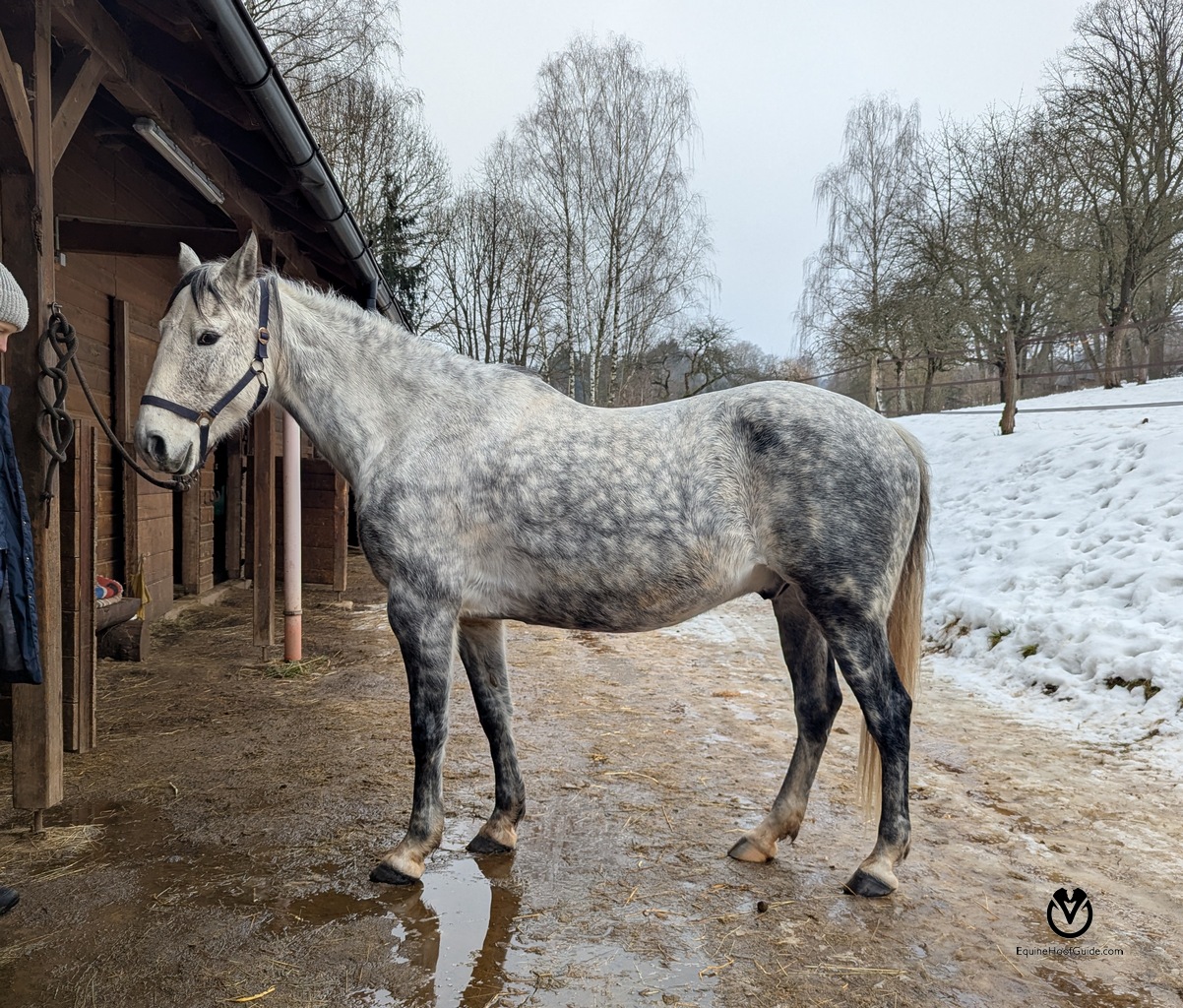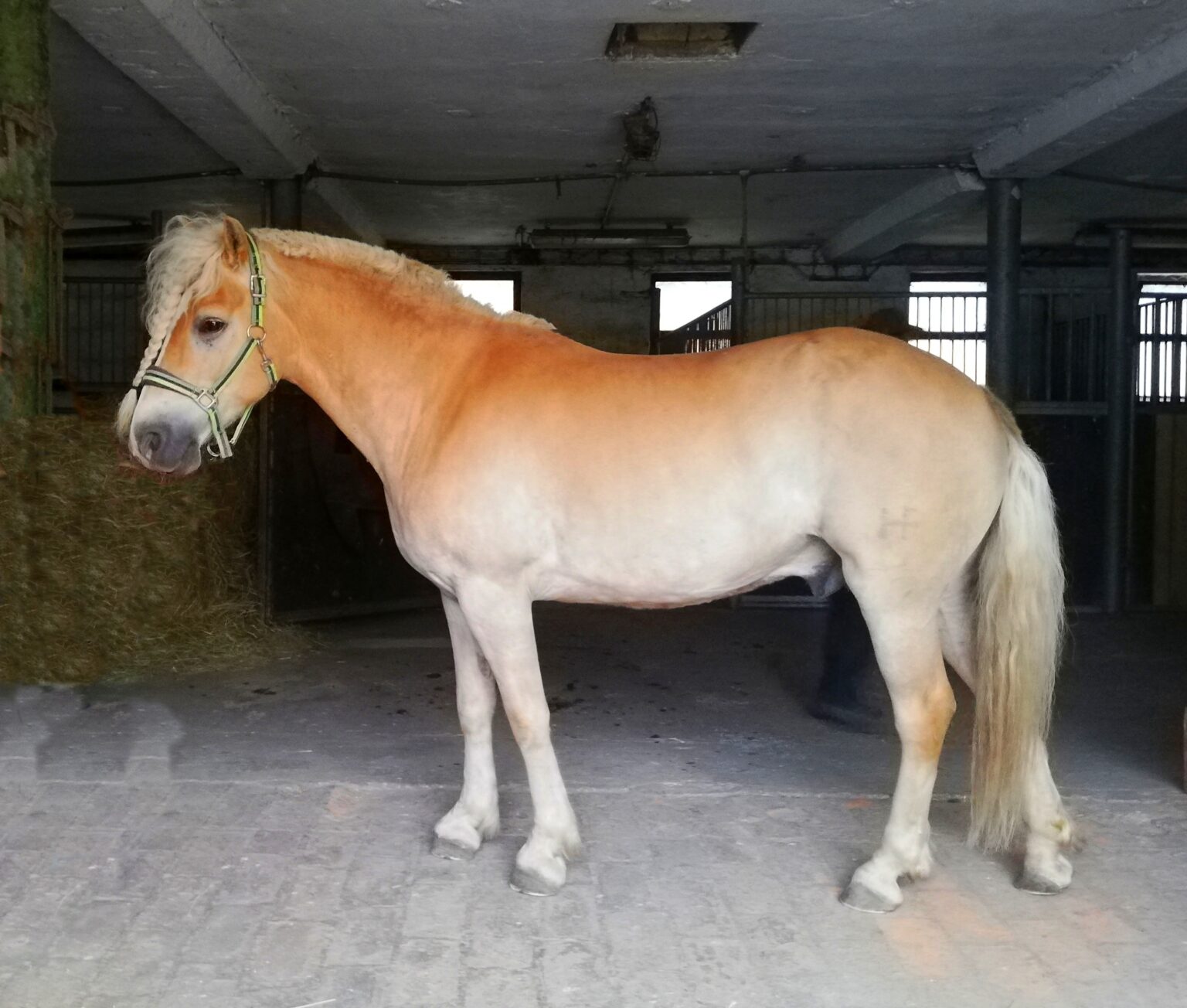
Characteristics: 7-years old Haflinger gelding, suffers from mild summer rash
Husbandary practice: box overnight, pasture during the day.
Use: recreational riding, light arena riding work, family horse
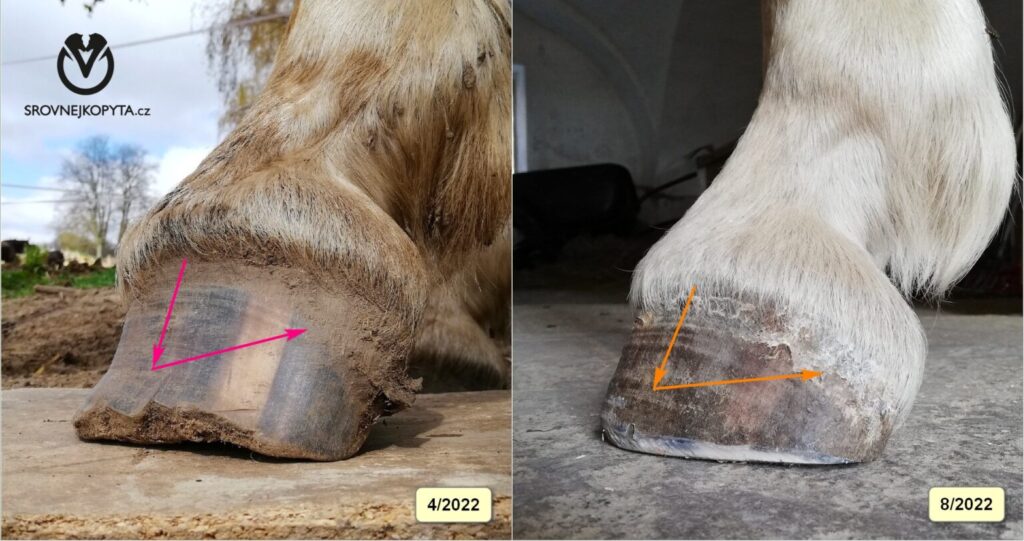
History and condition of the hooves as of April 16, 2022: raised on pastures with the herd by the breeder for up to 2,5 years. He was then bought by his former owner, who tried to improve the condition of his hooves, which was unsuccessful. According to information from the original owners, he has had clubbed hooves his entire life and the gelding’s father also had them (if a horse has clubbed hooves on both front legs, a common cause is faster bone growth compared to the growth rate of tendons in foals after birth. It is important not to overfeed foals, which makes the situation worse). The current owner purchased the horse in 2019 with hooves in poor condition. Initially, the horse was trimmed by a farrier who had visited this stable for a long time. At first, it wasn’t that bad, but over time, the work done by the farrier got worse. In July 2021, the owner found a new farrier and had X-rays taken. At that time, the horse was limping and didn’t want to run voluntarily. The owner of the stable said that he was always stiff when he was taken out from the box and it took him time to walk faster. The new farrier chose a procedure consisting of drastically shortening the heels and then shoeing with wedges. Horses with club hooves often stand “on their toes” after drastically shortening the heels with a gap between the heels and ground, because the shortened tendon keeps the heels raised. Shoeing with help of the wedge ensures, that the heels are shortened to a physiological height but the horse also loads the hoof evenly, not just over the toe.
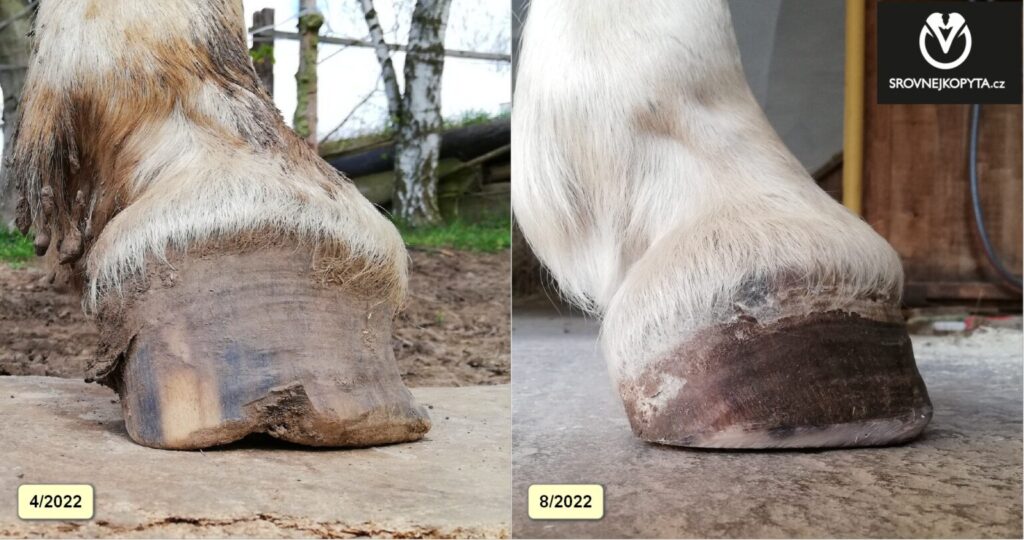
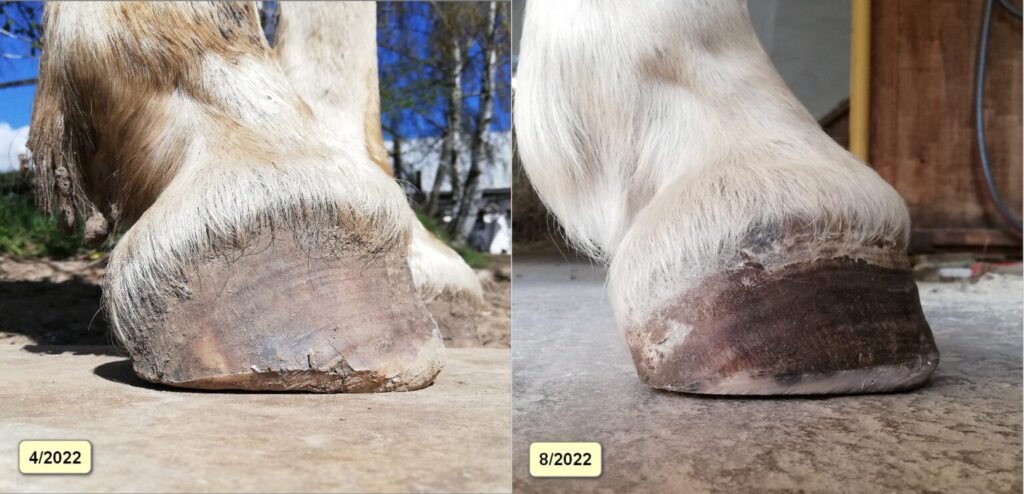
During the next re-shoeing in about 5 weeks, the gelding was already shod in classic horseshoes without wedges. The owner does not remember whether the gelding had been raising the heels for some time or not. During this period, it was a great strain on the tendons, so the horse was only in the box for 2 months and only went for walks (not very long and on a flat surface). The process of correction in this way developed successfully. However, the horse suffered from a strong separation phobia and is still restless when alone in the stable. After about 2.5 months, the cooperation with the farrier had to be terminated for reasons unrelated to the hooves and the owner could not find a replacement. Unfortunately, the gelding’s hooves returned to their original state, which you can see in the photos below.
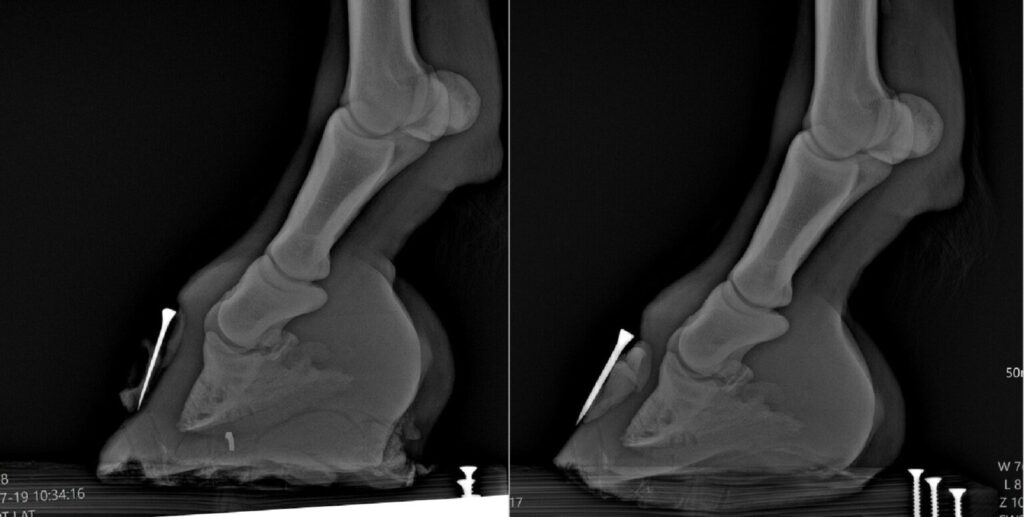


Hoof condition as of August 8, 2022: the front wall of the LF has grown straight, without curvature. There is still a small curvature in the FR, which should disappear over time. The hoof walls are almost no longer breaking, the hooves are evenly loaded after trimming and have a shape close to physiological. It can be assumed that the coffin bone is placed in a more physiological palmar angle with the ground. The gelding moves well all the time and has an appetite for movement. Since August 2022, the owner has been gradually starting to ride the horse at a walk and later at a trot. Galloping is not recommended for the time being due to the heavy load on the tendons. The gelding is currently more sensitive when walking on stones. The old sole is still retained in the heel area, and the horse has not stimulated its live functional sole sufficiently in recent years. It will take some time for it to adapt to the new stimulation.